

 Most people want to avoid the risks and recovery time associated with hip replacement surgery for as long as possible. There are several options are available to treat and manage pain in order to decrease the need for living assistance services.
As basic as it sounds, over the counter pain relievers and nonsteroidal anti-inflammatory drugs can help reduce pain and swelling. Before considering more drastic options, see if these medicines can help.
If pain is causing trouble sleeping, a sleep aid in conjunction with an over the counter pain reliever may do the trick. You may also want to try sleeping on your side – the opposite side from the one that is painful – with a pillow between your knees.
Although it may seem counter-intuitive, exercising can also help relieve pain by strengthening the muscles surrounding the bad hip joint. You should consult a doctor before beginning an exercise routine to make sure you will not aggravate the situation, but low impact exercises like swimming, water aerobics and stationary bicycling are usually beneficial. Appropriate stretching exercises can help increase your range of motion, which can also reduce pain.
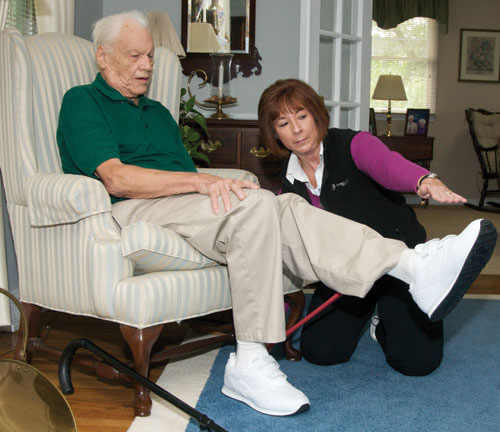
Physical therapy can provide some relief by helping increase your range of motion and building up muscle around your hip joint to support your bad hip. The advantage of physical therapy is that you are receiving advice, monitoring and support from a trained professional who can guide you carefully to improve the situation without further aggravating it.
Ice can also help reduce pain. Icing your hip with a cold pack or bag of frozen vegetables for 15-20 minutes several times a day can help with pain reduction.
A cortisone hip injection can help alleviate pain by reducing inflammation in the joint. It can also help more accurately confirm the source of the actual hip pain.
Taken together, there are several options to help avoid the need for immediate hip replacement surgery and/or prolong the need for living assistance services.

